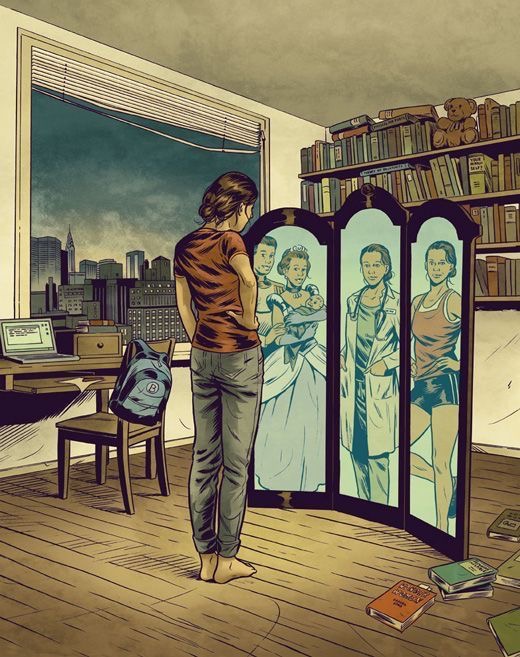
There comes a moment in life, quiet, unsettling, yet strangely liberating, when you begin to question everything you’ve ever believed to be true, not in a chaotic, rebellious way, but in a deeply reflective one. It’s the moment you realise that much of what shaped your thinking, your beliefs, values, fears, and even your identity, may not be entirely accurate.
And surprisingly, that realisation doesn’t complicate life. It simplifies it.
From childhood, we inherit a framework for understanding the world. Family, culture, religion, education, and society all contribute to this blueprint. We learn what is right and wrong, what success looks like, how relationships should function, and even how we should see ourselves. But we rarely encourage questioning these narratives. We accept them as absolute truths until life challenges them.
Until life challenges them.
It might come through disappointment, betrayal, exposure to new perspectives, or simply growing older and becoming more self-aware. Suddenly, things don’t add up the way they used to. The rules you followed don’t always lead to the outcomes you expected. The people you trusted may not align with the values you believed they had. Even your own choices may start to feel unfamiliar.
Embracing Uncertainty
At first, this can feel destabilising. If everything you thought was true is now uncertain, where do you stand?
But here’s where the shift happens.
When you accept that not everything you’ve known is entirely true, you release the pressure of needing life to fit into a rigid structure. You stop forcing things to make sense in ways they don’t. You become more open, more adaptable, and—most importantly—more at peace.
You begin to see people as they are, not as you assumed they were. You stop holding onto expectations that were never realistic in the first place. You permit yourself to evolve, to change your mind, to outgrow beliefs that no longer serve you.
Life becomes easier not because it suddenly becomes perfect, but because you stop resisting its complexity.
You learn to sit with uncertainty without needing immediate answers. You become less reactive and more observant. You understand that truth is often layered, nuanced, and sometimes uncomfortable—but it is also freeing.
Questioning And Choosing Your Beliefs
This mindset doesn’t mean you become cynical or distrustful of everything. Instead, you become discerning. You consciously choose what to believe. You build your own understanding of the world rather than inherit one unquestioningly.
A quiet confidence accompanies this change. A grounded sense of self no longer easily shakes from external opinions or unexpected changes. When you no longer rely on rigid “truths” to navigate life, you become flexible enough to handle whatever comes your way.
In the end, questioning everything isn’t about losing your foundation; it’s about rebuilding it, stronger and more authentic than before.
And that’s where the ease comes in.


Leave a Reply